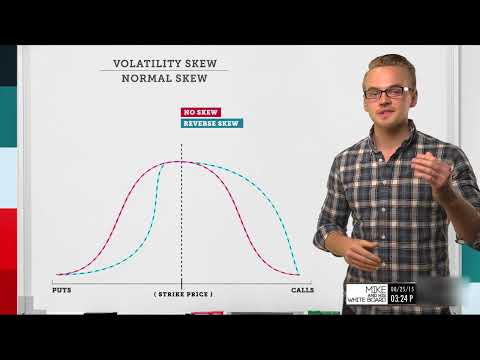
Volatility skew is a graphical representation of a characteristic of options contracts. Even when the strike price and date of maturity of multiple options contracts are similar, they may still see different implied volatilities assigned to them.
The volatility skew is the difference in i mplied volatility (IV) between out of the money options (OTM), at the money options (ATM) and in the money options (ITM).
Convexity, volatility skew, and variance are crucial for making informed trading decisions. These factors provide insights into market forecasts and help you choose the best trading strategies.
Volatility skew refers to the fact that implied volatility is higher for OTM options strike prices than ATM prices for a given expiration date. This is often referred to as a volatility "smile" due to the convex shape it creates when plotted on
Volatility skew reflects differences in implied volatility among options with the same expiration but different strike prices, highlighting market sentiment and expectations.
Volatility skew is the uneven distribution of implied volatility across option strikes with the same expiry. Volatility skew is one of the most important concepts in modern options trading because it shapes pricing, signals sentiment, and influences strat
In the options universe, the term "volatility skew" refers to the uneven distribution of implied volatility across different strike prices and expiration dates of options contracts. Implied volatility reflects the market's expectation of fut

![[補充] 波動率微笑曲線](https://i.ytimg.com/vi/dYJhQwZqyTg/hqdefault.jpg)